

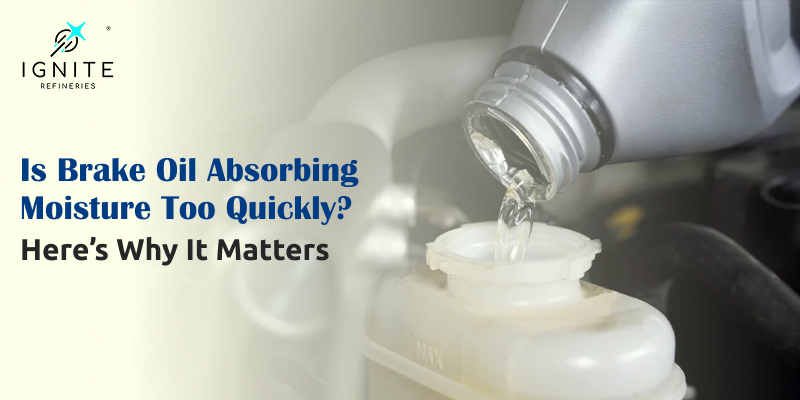
Brake fluid has one job: keep your foot connected to the wheels. Press the pedal, pressure travels through fluid-filled lines, and the brakes engage. What most drivers don’t know is that the fluid is absorbing moisture the entire time it’s in the car. After about two years, that moisture starts to affect how your brakes respond. Cheap or poorly formulated fluid speeds up that process, which is why the brake oil manufacturer in Odisha you source from matters a lot.
Table of Contents
- Why Does Brake Oil Start Absorbing Moisture Faster Than Expected?
- What Causes Brake Fluid to Lose Performance When It Gets Contaminated with Water?
- How Does Humid Weather or Storage Conditions Affect Brake Oil Quality Over Time?
- How Can Choosing the Right Brake Oil Manufacturer in Odisha Help Prevent Moisture Buildup?
- What Are the Risks of Ignoring Moisture Contamination in Brake Fluid for Too Long?
- What Can You Do to Keep Your Brake Fluid in Good Condition?
Why Does Brake Oil Start Absorbing Moisture Faster Than Expected?
A slow, steady intake of moisture is normal, but when the rate speeds up, there’s usually a reason. Some of the most common causes:
- Worn or cracked rubber seals in the master cylinder that let humid air creep in more easily than they should.
- Porous or ageing brake hoses that were never designed to be completely airtight over the years of heat and pressure.
- Repeatedly opening the reservoir cap, even for routine checks, lets fresh, humid air in each time.
- Using brake fluid from a bottle that was opened months ago and never properly sealed afterwards.
In a coastal or humid climate, all of these issues get worse faster. The air itself carries more moisture, and even a well-maintained system has to work harder to manage it.
What Causes Brake Fluid to Lose Performance When It Gets Contaminated with Water?
Brake fluid has to be incompressible. That’s the whole point. Water contamination breaks that. Heat from repeated braking turns the moisture into steam, and steam compresses. The pedal goes soft, the response slows, and in severe cases it sinks toward the floor. That’s a vapour lock. On top of that, water sitting in the lines corrodes callipers, cylinders, and ABS components quietly over time. The outside looks fine until it doesn’t.
By the time something looks wrong on the outside, the damage inside may already be significant.
How Does Humid Weather or Storage Conditions Affect Brake Oil Quality Over Time?
Humidity speeds everything up. In coastal areas or places with heavy monsoon seasons, brake fluid absorbs moisture faster simply because there’s more of it in the air. The same happens with storage. A car parked outside with a worn reservoir cap goes through fluid faster than one in a dry garage. A bottle left open in a workshop absorbs moisture within hours. If you use that fluid, you’re introducing contamination before it’s even in the car. Here are some that may already be a problem:
- The fluid in the reservoir appears dark brown or almost black rather than clear or light amber.
- The brake pedal feels noticeably softer than it did a year ago, especially after repeated stops.s
- The ABS warning light has come on without an obvious trigger
- The car takes longer to stop from the same speed than it used to
Read on: One Bad Batch of DEF Will Kill Your Sensors: Here is How to Spot It
How Can Choosing the Right Brake Oil Manufacturer in Odisha Help Prevent Moisture Buildup?
Brake fluid quality comes down to how it’s made and stored. A reliable brake oil manufacturer in Odisha uses high-quality raw materials, follows proper blending processes, and stores finished products in humidity-controlled storage. That produces fluid with better moisture resistance and a longer usable life. Cheaper alternatives may already carry some moisture off the shelf. A fluid that starts compromised doesn’t give you the same protection, and over time, that shows up in how your brakes feel and respond.
What Are the Risks of Ignoring Moisture Contamination in Brake Fluid for Too Long?
Skipping a brake fluid change is easy to justify. It’s also one of the more expensive maintenance mistakes to recover from. Over time:
- Callipers seize up because the internal corrosion prevents them from releasing properly after braking
- Bleeder screws rust shut, making a future fluid flush far more labour-intensive than it needed to be
- ABS module valves get clogged with sludge from degraded fluid, triggering warning lights or causing the system to malfunction
- Steel brake lines corrode from the inside out, eventually failing with no visible warning on the outside.
What Can You Do to Keep Your Brake Fluid in Good Condition?
Protecting brake fluid doesn’t require any special tools or expertise. Small, consistent habits do most of the work:
- Check the fluid colour in the reservoir when the hood is already open for something else. Dark fluid is an easy visual cue.
- Think in terms of time, not just mileage. Even low-mileage vehicles need the fluid changed because moisture enters with age.
- In high-humidity environments or mountain terrain, consider a shorter service interval than the standard recommendation.
- When buying brake fluid, check the seal on the bottle. Avoid anything open or stored in a warm, damp space.
Wrapping It Up
Most people don’t think about brake fluid until the pedal feels weird. By then, it’s already been absorbing moisture for a while. The fix isn’t complicated: check it every so often, change it when it’s due, and don’t cheap out on what you buy. If you’re in eastern India, Ignite Refineries is a trusted brake oil manufacturer in Odisha that makes fluid that actually holds up through a monsoon. Contact us today to find the right fluid for your vehicle or fleet. After all, your brakes are only as good as the fluid in them.
Frequently Asked Questions
- Can I mix DOT 3 and DOT 4 brake fluid?
Yes, both are glycol-based and can be mixed in an emergency, but doing so reduces the performance benefit of DOT 4, so a full flush is recommended as soon as possible.
- How do I know if my brake fluid needs changing?
Check the colour, feel, and behaviour. Dark fluid, a softer pedal than usual, longer stopping distances, or an ABS warning light with no clear cause are all signs it’s time for a change.
- Does brake fluid go bad sitting in a sealed bottle?
Yes. Even an unopened bottle has a shelf life, and once opened, brake fluid starts absorbing moisture from the air within hours.