

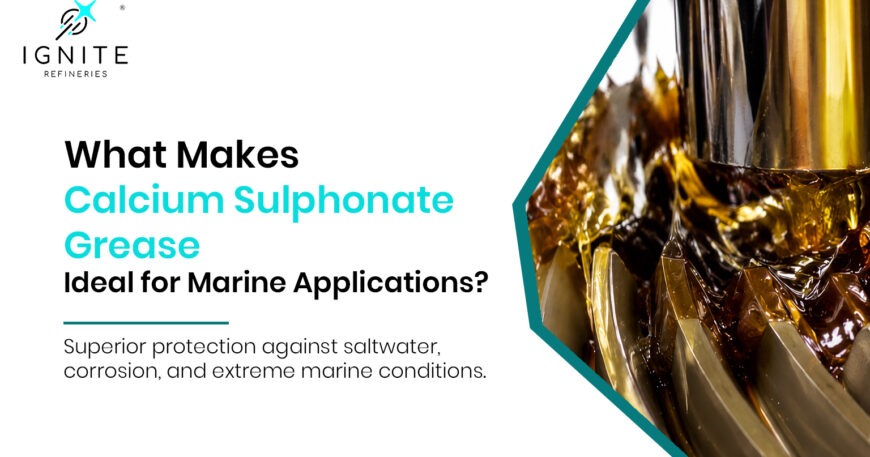
Calcium sulphonate complex grease holds up in marine settings because it doesn’t wash off. Salt spray, constant moisture, heavy rain. It stays on metal through all of it, which is why ships, port equipment, and offshore platforms use it as the default.
It even works when the metal coating is constantly wet. Port cranes, winches, and mooring hardware tend to last longer with this grease in use, and workers don’t have to reapply it nearly as often. Sourcing from a reliable calcium sulphonate complex grease manufacturer makes the difference between a grade built for marine demands and one stretched to meet them.
Table of Contents
- Why Does Calcium Sulphonate Grease Not Wash Off in Saltwater Like Regular Grease Does?
- What Grease Should You Use for Anchor Chains, Winches, and Deck Equipment on a Ship?
- Does Calcium Sulphonate Grease Prevent Rust on Equipment Exposed to Saltwater?
- Is Calcium Sulphonate Grease Safe to Use on Equipment That Goes Underwater or Gets Submerged?
- Does Calcium Sulphonate Grease Meet Any Marine or Offshore Industry Standards?
Why Does Calcium Sulphonate Grease Not Wash Off in Saltwater Like Regular Grease Does?
Regular grease washes off because water gradually pushes it away from the metal. Calcium sulphonate grease resists this because its thickener system bonds to metal more strongly than water can displace it.
Standard soap-based greases soften when wet and lose their protective film. Calcium sulphonate grease repels water rather than absorbing it, so the film stays intact even in saltwater. That is why it lasts weeks on exposed equipment, where lithium-based grease might wash away in days. For operations evaluating a marine-grade calcium sulphonate grease supplier, washout resistance is usually the first specification checked before anything else.
What Grease Should You Use for Anchor Chains, Winches, and Deck Equipment on a Ship?
Calcium sulphonate grease is the right choice for anchor chains, winches, and deck equipment. These parts face saltwater constantly, carry heavy loads, and often go long periods without being regreased. General-purpose grease does not hold up under those conditions.
Ship equipment where calcium sulphonate grease is the right choice:
- Anchor Chain Links and Pockets: The direct exposure to water on deployment means that only the most water-resistant greases are left in usable condition.
- Crane and Hoist Bearings: Extreme pressure performance is needed for heavy shock loads and saltwater exposure, without additives that break down under stress.
- Rudder and Stern Tube Bearings: Continuous operation in submerged conditions demands both water resistance and long relubrication intervals.
- Open Deck Machinery: Exposed rotating components need grease that sticks through weather, wash-down, and mechanical vibration.
Explore More: Is Your Thermic Fluid the Reason Your Boiler Fuel Bills Keep Rising
Does Calcium Sulphonate Grease Prevent Rust on Equipment Exposed to Saltwater?
Calcium sulphonate grease does prevent rust, and it does so through its thickener chemistry rather than through added inhibitors. It neutralises acidic contaminants and holds a protective barrier on metal surfaces that saltwater cannot easily break down.
That built-in protection is particularly valuable in bearings. Rust causes pitting, pitting changes the bearing geometry, and the wear that follows leads to failure. Corrosion-resistant calcium sulphonate grease in India operations relies on stops that chain before it starts.
Is Calcium Sulphonate Grease Safe to Use on Equipment That Goes Underwater or Gets Submerged?
For submerged equipment, calcium sulphonate grease is a safe and practical choice. In these kinds of situations, it’s water resistance at full immersion, not just against spray or splash, that differentiates it from common industrial greases.
That said, conditions vary significantly. Periodic immersion in harbour water puts different demands on a grease than continuous submersion under pressure. For extreme or prolonged submerged applications, a heavy equipment calcium sulphonate grease manufacturer can advise on the specific grade suited to those conditions.
Does Calcium Sulphonate Grease Meet Any Marine or Offshore Industry Standards?
Good quality Calcium Sulphonate Grease has been tested to meet accepted international standards for water resistance, load bearing ability, corrosion protection, and mechanical stability. Three tests tell you most of what you need to know: ASTM D1264 for water washout, ASTM D2596 for weld load, and ASTM D1743 for corrosion protection. Calcium sulphonate grease clears all of them comfortably.
Offshore and vessel procurement teams want documented test data, not claims. The premium lubricating grease manufacturers in Odisha supply to the marine sector with test data to support their formulation before the order is processed.
- Check Before Specification: Water Washout rating – expect < 3% @ 79°C per ASTM D1264. Anything higher and the grease will not hold on metal the way it should in wet marine conditions.
- Four-Ball Weld Load: Higher values mean the grease handles shock loading better. This matters with winches and crane bearings that take sudden heavy loads during operation.
- Dropping Point: Should sit above 300°C. Below that, the grease can thin out in bearings running hot for long periods and stop protecting the way it should.
- Corrosion Protection Pass Rating: Confirmed per ASTM D1743. This test is a confirmation of protection against rust in saltwater conditions, not just taking the manufacturer’s word for it.
- NLGI Grade: Grade 1 or 2 covers most marine bearing applications. Wire ropes and open deck gear need semi-fluid grades that work their way into tight contact points more effectively.
Conclusion
Marine conditions expose every weakness a grease has, and general-purpose products rarely hold up across saltwater, heavy loads, and long service gaps. Calcium sulphonate grease handles those conditions because its core properties come from the thickener structure, not additives that deplete. Contact Ignite Refineries for grade recommendations matched to your equipment and environment.
Stay tuned for the next blog, where we explore another critical aspect of industrial lubrication and how the right product choice protects your equipment and your maintenance budget.
Frequently Asked Questions
- Can Calcium Sulphonate Grease Be Used in Both Hot and Cold Marine Climates?
Yes, its high dropping point and stable thickener structure keep it effective across a wide temperature range, from cold northern shipping routes to hot tropical port environments.
- How Often Should Calcium Sulphonate Grease Be Reapplied on Marine Equipment?
Less often than most greases, because its water resistance and structural stability mean it stays on metal longer between service intervals, reducing maintenance frequency on hard-to-reach deck and underwater components.
- Does Calcium Sulphonate Grease Work on Both New Equipment and Older Corroded Components?
It works on both, though on older components, its ability to neutralise acidic contaminants and form a fresh protective barrier makes it particularly useful for slowing further corrosion damage on metal that has already seen wear.