


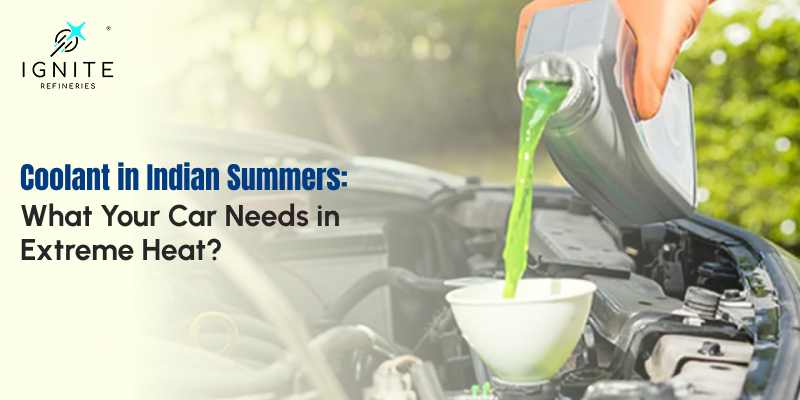
You probably know that feeling. Stuck in city traffic on a hot May afternoon, the sun is relentless, and the temperature is touching 44°C. You glance at the dashboard and notice the gauge rising. The AC is on full blast. The engine is working hard. Your car is sweating too, even if you can’t see it. This is where car antifreeze coolant quietly does its most important work.
Most Indian drivers think about engine oil, tyre pressure, or AC gas before a long summer drive, but coolant rarely makes that checklist. Yet running on old or diluted coolant in 45°C heat is basically a ticking clock. Vehicle service experts say a significant share of summer breakdowns across Indian cities is directly attributable to cooling system failures, most of which are preventable with basic maintenance.
Table of Contents
- Does a Car Really Need Coolant During Extreme Indian Summers, or Is Water Enough?
- How Often Should Coolant Be Checked or Replaced When Temperatures Cross 40°C?
- What Are the Signs That the Coolant Is Not Working Properly in Hot Weather?
- Can the Wrong Coolant Really Damage Your Car in Peak Heat?
- Why Does a Car Overheat Even When the Coolant Level Looks Fine?
Does a Car Really Need Coolant During Extreme Indian Summers, or Is Water Enough?
This is probably the most common question, and the honest answer might surprise a few people.
Plain water does cool an engine, so technically, it works. The problem is that water boils at 100°C, and in stop-and-go traffic during a peak Indian summer, your engine regularly crosses that threshold. What happens next is straightforward: the water boils, steam builds pressure, and the cooling system fails. Not gradually. Suddenly.
A proper coolant mixture raises that boiling point well above 100°C and also contains corrosion inhibitors that protect your radiator and engine passages from rust damage that plain water quietly causes over time.
So, water works until it doesn’t. Coolant keeps working even when conditions get brutal.
Here’s what coolant actually does for your engine during an Indian summer:
- Raises the boiling point of the fluid circulating in your engine, preventing boilover in traffic
- Prevents rust and corrosion inside metal components like the radiator, water pump, and engine block
- Lubricates the water pump so it keeps moving fluid without wearing out early
- Carries heat away from the engine and releases it through the radiator more efficiently than plain water
- Prevents mineral scale from building up inside the radiator, keeping flow and cooling efficiency intact over time
How Often Should Coolant Be Checked or Replaced When Temperatures Cross 40°C?
Check it at least once a fortnight during peak summer months (March through June). The level in the reservoir should sit between the minimum and maximum marks. If it keeps dropping, there’s likely a leak somewhere worth looking into.
For a full flush and replacement, most mechanics recommend every two to three years or 40,000 to 50,000 kilometres, though in heavy city traffic or peak highway heat, go earlier. Always top up with the same type and colour of coolant already in the system. Mixing formulations can produce a gel-like sludge that clogs the radiator and water passages.
If you’re unsure what your vehicle needs, MACHFLO Fluidix Coolant is formulated specifically for Indian vehicle types and climate conditions.
You May Like: The “Cheap” Oil Trap: Calculating the Real Cost of Machine Downtime
What Are the Signs That the Coolant Is Not Working Properly in Hot Weather?
Your car usually gives a few warnings before anything serious happens. The trouble is, they’re easy to dismiss as “Oh, it’s just hot outside.” Here’s what to look out for:
- The temperature gauge is moving above normal during regular driving or traffic, not just steep climbs
- A sweet smell near the engine or inside the car, which often signals a coolant leak
- White or yellowish residue around the radiator cap or hose connections
- Fog or steam from under the bonnet, especially after a long drive, when you stop
- Coolant level repeatedly dropping even though there’s no visible puddle under the car
A dropping level without any visible leak could point to an internal leak, where coolant is burning inside the engine. That usually shows up as white smoke from the exhaust. Don’t sit on it; get it checked immediately.
Can the Wrong Coolant Really Damage Your Car in Peak Heat?
Yes. The wrong coolant can do more harm than no coolant at all.
Different vehicles have different cooling system materials, and coolants are formulated to match them. Using the wrong type can actually accelerate corrosion rather than prevent it.
The two main types are HOAT and OAT. Most modern Indian vehicles specify one or the other. Check your owner’s manual before buying anything off a shelf.
Generic or low-grade coolants from roadside shops may look identical in the bottle, but deplete much faster. In Indian summer conditions, depleted inhibitors mean metal surfaces inside the radiator and engine start corroding quietly over months before any damage becomes visible.
Why Does a Car Overheat Even When the Coolant Level Looks Fine?
This confuses a lot of drivers. The reservoir is full, so coolant can’t be the issue, right?
Not necessarily. A full reservoir doesn’t mean the cooling system is healthy. There are several other reasons overheating can happen even when the coolant level looks normal:
- The radiator fan is too weak to pull enough air when the car is barely moving
- The thermostat is stuck shut, and coolant never makes it to the radiator
- Years of sludge and scale inside the radiator mean it can’t cool properly anymore
- The water pump is on its way out and barely moving coolant through the system
- A blown head gasket is letting air into the coolant lines, blocking the flow
The Bottom Line
Indian summers are genuinely tough on a cooling system. The right car antifreeze coolant, replaced on schedule, is what keeps everything running within safe limits through the heat, the traffic, and the long idling stretches. It’s not the most exciting maintenance item, but it’s one of the more important ones.
If you haven’t checked yours recently, don’t wait. Explore the range of coolants from Ignite Refineries built for Indian vehicles and conditions, and pick one that fits your car. Not sure where to start? Talk to us, and we’ll help you find the right fit for your vehicle.
Frequently Asked Questions
- Can I mix two different coolants if I run out and need to top up quickly?
It’s not recommended, as different formulations can react, producing sludge that clogs the radiator. If you’re stuck, distilled water is a safer temporary fix until you get the right coolant.
- Is engine coolant the same as antifreeze?
Yes, it’s the same product doing two jobs. It prevents boiling in summer and freezing in winter, and since both functions rely on the same chemistry, you need it in your system all year.
- My car has never had a coolant issue. Do I still need to replace it on schedule?
Yes, because coolant degrades over time and turns acidic, which means the corrosion inhibitors stop working even when the level looks fine. Your radiator starts corroding from the inside without any visible warning.